
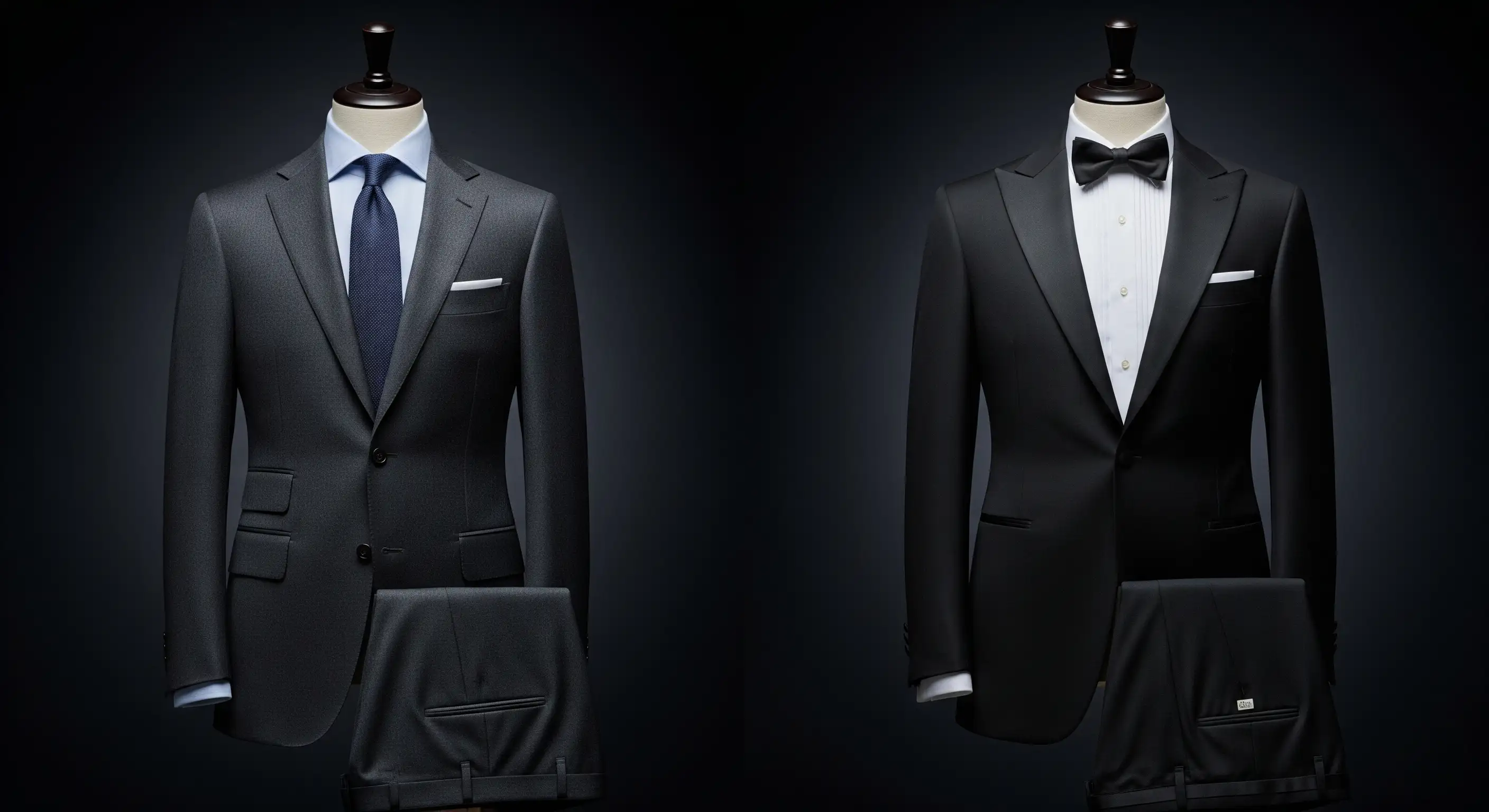
The suit vs tuxedo debate trips up even well-dressed men. At first glance, a black suit and a black tuxedo can look almost identical — but show up in the wrong one and you’ll feel it instantly. The differences between a suit and tuxedo go beyond fabric. They determine how formal you look, how appropriate your outfit is for the occasion, and how confident you feel walking into the room.
Whether you’re dressing for a wedding, a corporate event, or a black-tie gala, understanding the tuxedo vs suit distinction helps you make the right call every time. Here’s what separates them — and when to reach for each.
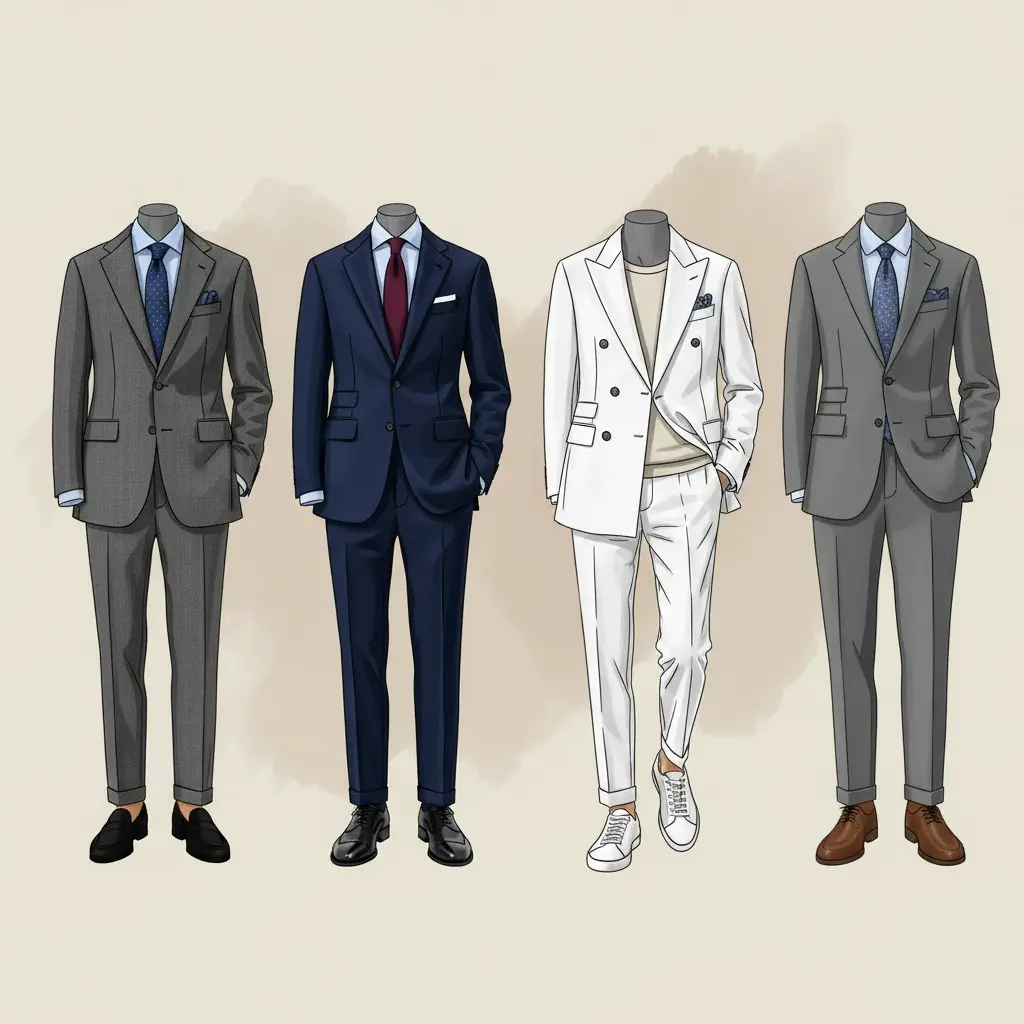
A suit is a matched jacket and trouser set, typically made from wool, cotton, linen, or blended fabrics. The jacket and trousers share the same material, colour, and finish — no satin, no sheen, no extra ornamentation. That simplicity is exactly what makes suits so versatile.
You can wear a sharp navy herringbone suit to a board meeting on Monday, throw on a white suit for a summer wedding on Saturday, and pair a grey suit with brown shoes for a client dinner in between. No other piece of menswear covers that much ground. For tips on nailing the grey suit look specifically, our guide on what shirt and shoes to wear with a grey suit breaks it all down.
Suits come in two-piece (jacket and trousers) or three-piece (adding a waistcoat) configurations. Lapel styles range from notch to peak to shawl — all made from the same fabric as the jacket. Fits vary from classic to slim, and colours run the full spectrum: charcoal, navy, brown, olive, and beyond. Browse FJackets’ full men’s suit collection to see what’s available.
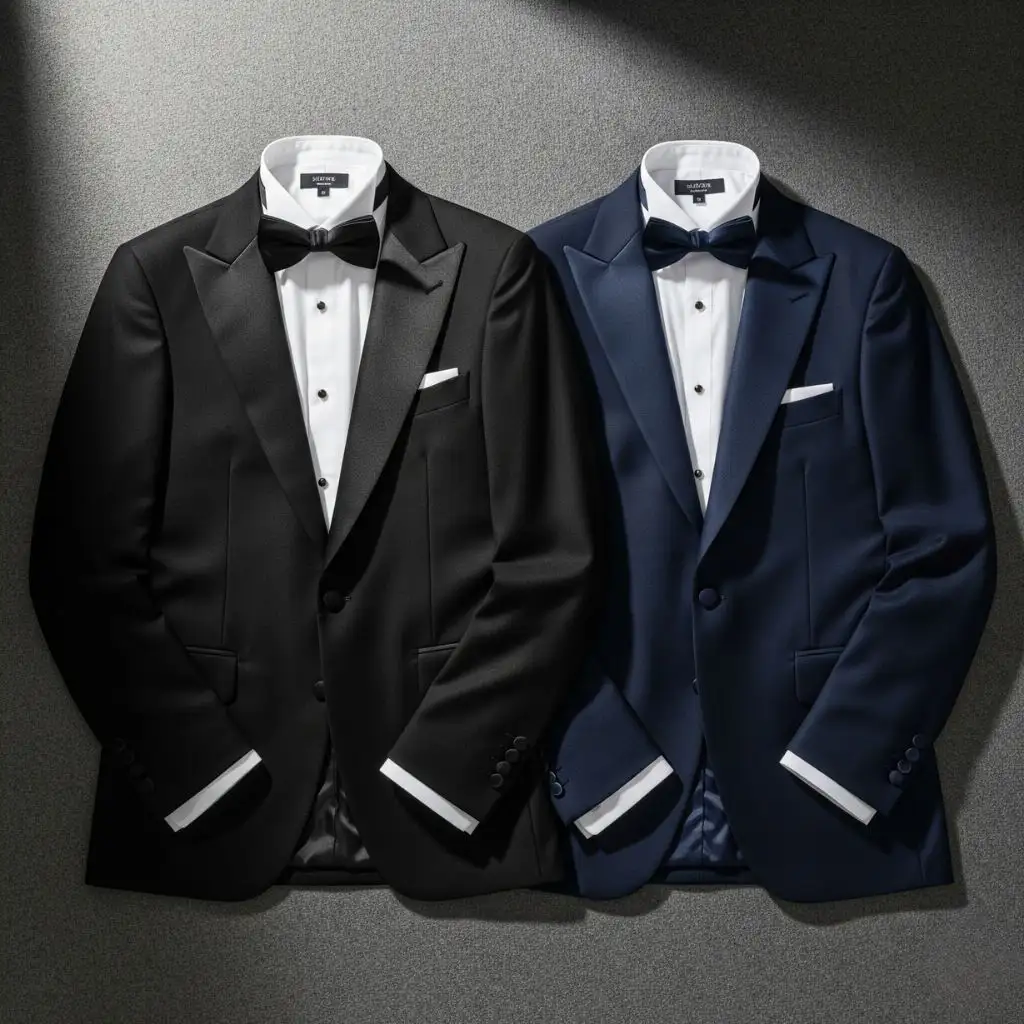
A tuxedo — also called a dinner jacket or dinner suit — is built specifically for evening formality. It shares the basic silhouette of a suit (jacket and trousers), but the details are what set it apart: satin or grosgrain lapels, satin-covered buttons, and a satin stripe running down each trouser leg.
The most popular choice is the classic black tuxedo — a safe, timeless option for any black-tie event. But many men are choosing a midnight blue tuxedo instead, because the deep navy looks richer under evening and candlelight than pure black does. For bolder occasions, a white tuxedo jacket paired with black trousers delivers a refined summer statement.
Tuxedos are also paired with specific accessories — bow ties, French-cuff shirts, cummerbunds or waistcoats — that wouldn’t typically accompany a standard suit. Explore the full range of men’s tuxedos to find your fit.
| Feature | Suit | Tuxedo |
|---|---|---|
| Lapels | Same fabric as jacket (matte) | Satin or grosgrain (sheen) |
| Buttons | Fabric-covered or plain | Satin-covered |
| Trouser Side Stripe | None | Satin stripe down each leg |
| Shirt | Standard dress shirt | Pleated or bib-front tuxedo shirt |
| Neckwear | Necktie or open collar | Bow tie (traditional) |
| Shoes | Oxfords, loafers, or modern sneakers | Patent leather or highly polished shoes |
| Formality | Business casual to semi-formal | Black-tie and formal evening |
| Best For | Office, weddings, cocktail events, everyday | Galas, black-tie weddings, award nights |
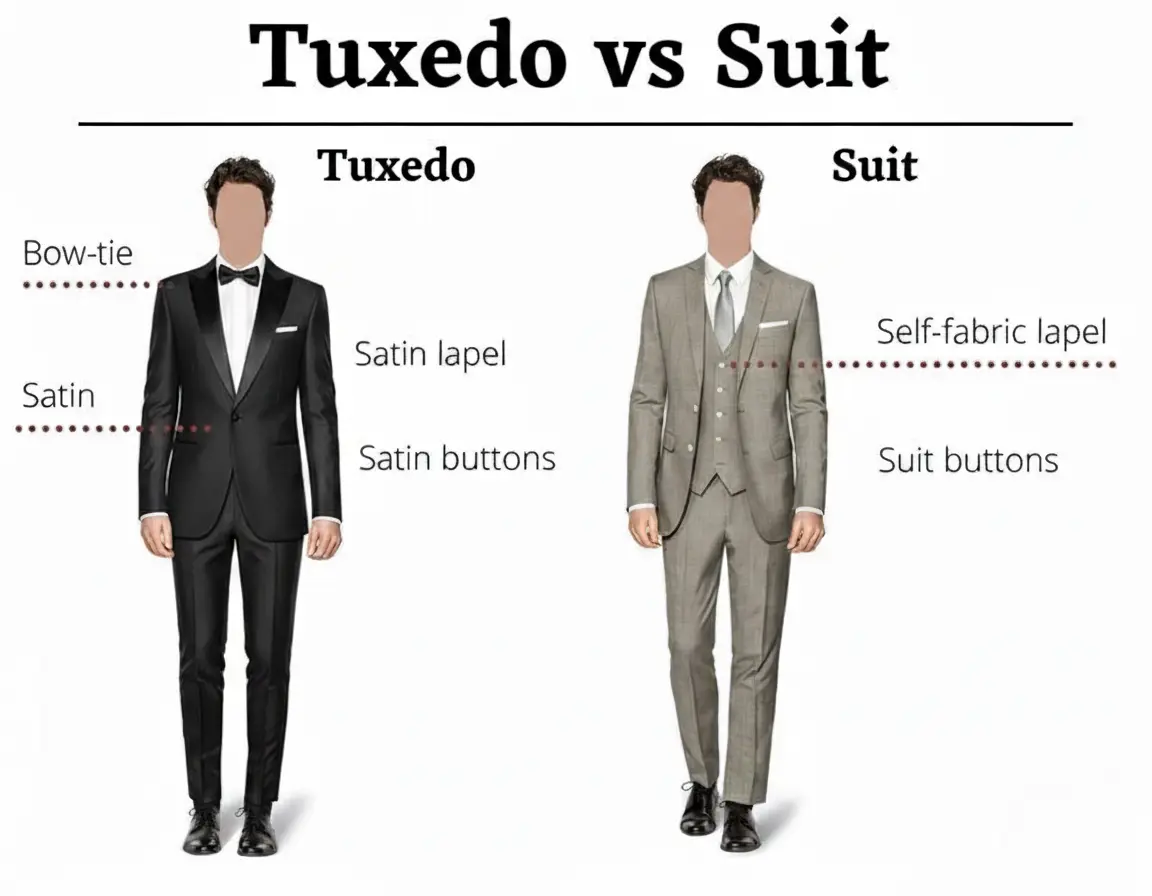
The lapel is the fastest way to tell a suit from a tuxedo. On a suit, the lapels are made from the exact same fabric as the rest of the jacket — giving it a clean, uniform matte look. Whether it’s a charcoal wool suit or a navy slim-fit, the lapels blend right in.
On a tuxedo, the lapels are faced in satin or grosgrain, which creates a visible sheen against the matte jacket body. That contrast is intentional — it signals formality. You’ll spot it immediately on a black tuxedo or midnight blue tuxedo. Most tuxedos feature peak or shawl lapels, while suits more commonly use notch lapels (though all three styles appear across both).
Suits are built from everyday fabrics — wool, tweed, linen, cotton, or blends. The finish is almost always matte, which keeps them versatile across seasons and settings. A grey three-piece suit in worsted wool or a brown double-breasted suit in tweed both fall squarely in this territory.
Tuxedos use finer weaves and add satin accents throughout — not just on the lapels, but also on the buttons and the trouser stripe. Even a white tuxedo uses satin-covered buttons and a subtle side stripe to distinguish itself from a plain white suit. For something bolder, a velvet suit or tuxedo adds texture that works particularly well at holiday and evening events.
Suits give you freedom. Pair them with a standard dress shirt and necktie, a knit polo for smart-casual, or even an open collar for relaxed events. A navy suit with a burgundy tie is a reliable wedding look. If you’re unsure what to layer underneath, our guide on what to wear under a blazer covers the principles that apply to suit jackets too.
Tuxedos follow stricter rules. The traditional setup is a white pleated or bib-front tuxedo shirt with French cuffs, a black silk bow tie, and either a cummerbund or a low-cut waistcoat. Cufflinks replace standard shirt buttons. The accessories are part of the look — skipping them feels incomplete.
Suits pair well with a wide range of footwear. Leather Oxfords and brogues are classics for business, while loafers work for smart-casual settings. Modern styling even allows clean white sneakers with slim-fit suits for a streetwear edge. A grey suit with brown leather shoes, for example, is one of the most popular office combinations.
Tuxedos demand formal footwear — typically patent leather Oxfords or pumps with a high-shine finish. The leather should reflect light just as the satin lapels do, creating a cohesive evening look. This applies whether you’re wearing a classic black tuxedo or a midnight blue velvet tuxedo.
This is where the suit vs tuxedo decision really comes down to. Suits handle the broadest range of occasions: job interviews, office days, cocktail parties, daytime weddings, date nights, and semi-formal events. A navy suit is arguably the most versatile piece in a man’s wardrobe — it works everywhere. Planning a summer wedding? Our guide on when and how to wear a white suit can help you pull it off with confidence.
Tuxedos are reserved for evening formality: black-tie weddings, charity galas, award ceremonies, opera nights, and New Year’s Eve events. If the invitation says “black tie,” a tuxedo isn’t optional — it’s expected. For prom or younger formal events, a prom tuxedo offers the right level of polish without overdoing it. And if you’re dressing for a themed event, our guide on what to wear to a 1920s themed party covers vintage-inspired formal styling.
What makes a tuxedo different from a suit?
The key difference is satin. Tuxedos have satin-faced lapels, satin-covered buttons, and a satin stripe on the trousers. Suits use uniform matte fabric throughout with no satin detailing.
Can you wear a black suit to a black-tie event?
It’s not recommended. While a black suit looks sharp, a black-tie dress code specifically calls for a tuxedo — either a classic black or midnight blue option. Wearing a suit to a black-tie event signals that you didn’t know the difference.
Is a tuxedo more expensive than a suit?
Generally, yes. The satin detailing, specialty construction, and formal-grade fabrics add to the cost. However, at FJackets, both suits and tuxedos are priced fairly through our direct-to-consumer model — no retail markups.
Should I rent or buy a tuxedo?
If you attend black-tie events once a year or less, renting makes financial sense. But if formal occasions are a regular part of your calendar, owning a well-fitted tuxedo pays for itself quickly. A classic black tuxedo in a modern slim fit will serve you for years.
What’s more versatile — a navy suit or a tuxedo?
A navy suit, by a wide margin. You can wear it to the office, a wedding, a cocktail party, or a dinner date. A tuxedo is limited to formal evening events only.
Can I wear a tuxedo to a daytime wedding?
Traditionally, no. Tuxedos are evening attire. For daytime weddings, a well-tailored suit in navy, charcoal, or light grey is the better choice. Save the tuxedo for evening ceremonies.
How do I make sure my suit or tuxedo fits properly?
Start with accurate measurements. Our jacket size measurement guide walks you through measuring your chest, shoulders, and sleeve length to find the right fit before you order.
The suit vs tuxedo choice comes down to one question: what does the occasion call for? A navy or grey suit handles everything from Monday meetings to Saturday weddings — it’s the workhorse of a man’s wardrobe. A black tuxedo, midnight blue tuxedo, or white tuxedo jacket steps in when the dress code demands evening formality and nothing less.
Get both right and you’ll never second-guess what to wear again. Start building your formal wardrobe with FJackets’ men’s suits and tuxedo collection — crafted for fit, built for value.
John Austin is an expert contributor with 5+ years in the leather industry, blending precise care tips with cutting-edge fashion advice.